
-
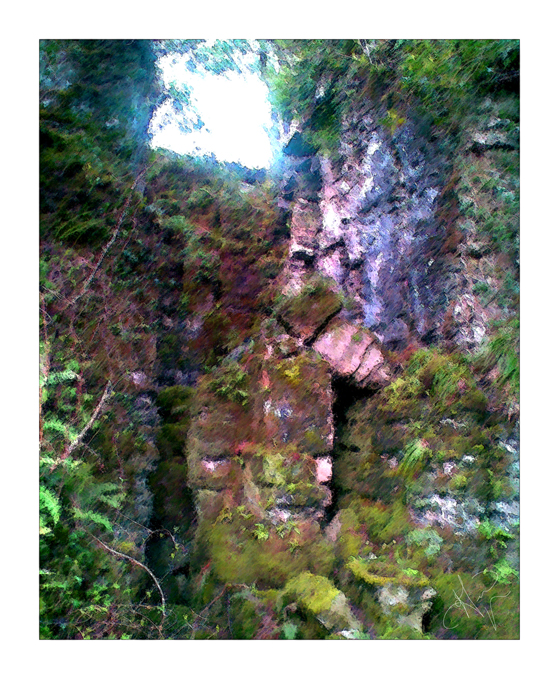
Swally hole at Teampul, Glencar. Digital pastel print A space for expression
I’m exploring the ideas surrounding sound and frequency as it relates to humanity and the nature of the Universe. Researching both science articles and spiritual understandings, I’m navigating through ideas and practical applications stretching from the earliest evidence as presented by archaeology, to the latest medical and scientific applications.
This informs my art practice that seeks to create musical instruments that are for use in sound therapy sessions and creative musical compositions. These instruments are also used to visualise the way sound energises the performance space.
Welcome to my blog!
I’m David, an Artist and simple living enthusiast who is dedicated to living with less and finding joy in the simple things. Through this blog, I aim to share my expertise, insights, and experiences. Join me on this journey as we explore the world of slow, purposeful living together!
Find me at:
Resonating Landscapes
I’m currently exploring the effects of particular frequencies on the human and natural worlds. This draws upon my archaeological and sound therapy investigations.
Technical Development Residency documentation and research
Proposal
Resonating Landscapes
In a previous residency project (New Sites New Fields), I looked at the Carrowkeel Neolithic tombs in relation to their response to infrasound.
Following on, my research indicated that the use of resonant spaces did not end with the Neolithic peoples, but continued at least into the late European medieval period with the construction of the great cathedrals. In particular, I researched the early Christian settlement on the isle of Inishmurray in Ireland and the Great Cathedral of Wells in the UK.
My archaeological research also highlighted that the siting of Neolithic structures are on, or very close to highly fertile brown soils. Suggesting that not only did these infrasounds have effects on the people, but also on the surrounding environment.
The Neolithic structures of Northern Europe are believed to resonate to the frequencies of 2 to 5 Hz. This range fits into the Delta human brainwave frequency ( 0 – 4 Hz) which is associated with deep sleep and the unconscious mind. Then moving into the 5 to 8Hz range we enter Theta brain waves and its association with REM sleep, creativity, and hypnagogic states. Additionally we arrive at the Schumann frequency (~7.83Hz) of the Earths’ resonance. This frequency has been linked in Humans to improved cognitive functions, reduced stress and anxiety, and enhanced immune functioning.
Continuing on from my previous exploration of these themes, my proposal is to make fixed frequency instruments that, in combination, generate binaural beats within the 4 to 20Hz range. To produce these binaural beats, two tones of slightly different frequencies are sounded, and these should be in the audible range. Thus to continue the theme of key resonant frequencies, the instruments I will make will be tuned around the Solfeggio frequencies. These are associated with the Hindu Chakra points and the activation of body and psychological responses. However, my research has highlighted an issue with these specified frequencies, thus I’m looking to use Cymatic imaging to test the results being produced.
AI generated: We are Frequency – research section
Schumann Resonance: Research Findings from Recent Publications
The interaction between the human body and the Earth’s magnetic field at Schumann Resonances (SRs) is one of the important fundamental questions of science that continues to be studied.
Existing evidence shows that low-frequency SRs decrease the risk of developing acute myocardial infarction. SRs are an important external natural factor influencing the human body, coordinating metabolic processes and the functional activity of its cells. An EMF emitter has been developed to investigate the effects of the extremely-low frequency SR-mimicking EMF (SREMF) on cancer and normal cell proliferation. The impact of natural EMF on creatures could afford a novel strategy to personalized cancer prevention and treatment.
However, there is a tendency for SR’s to promote cases of chronic kidney disease. Therefore, it is necessary to take into account the importance of their physiological influence, as well as the possibility of the activation of pathogenetic mechanisms of non-communicable diseases (NCDs).
Sunspot numbers and indices of Geomagnetic Activity are correlated with serious human health effects. The Schumann Resonance signal intensity is modulated and highly correlated with solar activity and the electron concentrations in the lowest layers of the ionosphere. The enhanced or weakened solar activity moves the level of the SR signal outside the normal homeostatic range and, through the Melatonin mechanism, causes health problems and enhanced death rates in large human populations. A wide range of mortalities that are associated with Melatonin reduction, are found to be significantly correlated with sunspot numbers, including cancer, cardiac and neurological mortality. This provides strong support for identifying the Schumann Resonance signals as the Solar and Geomagnetic Activity (S-GMA) biophysical mechanism, primarily through a melatonin mechanism, that strongly supports the classification of S-GMA as a natural hazard.
Information drawn from:
Journal of Bionic Engineering
Study of the Inhibition of Schumann Resonance-inspired Electromagnetic Field on Cancer Cell Proliferation
Research Article Published: 17 December 2024
Natural Hazards
Schumann Resonances, a plausible biophysical mechanism for the human health effects of Solar/geomagnetic activity
Published: July 2002
Schumann Resonance and Sunspot Relations to Human Health Effects in Thailand
Published: May 2003
Applied Sciences
Schumann Resonances and the Human Body: Questions About Interactions, Problems and Prospects
Published: January 2025
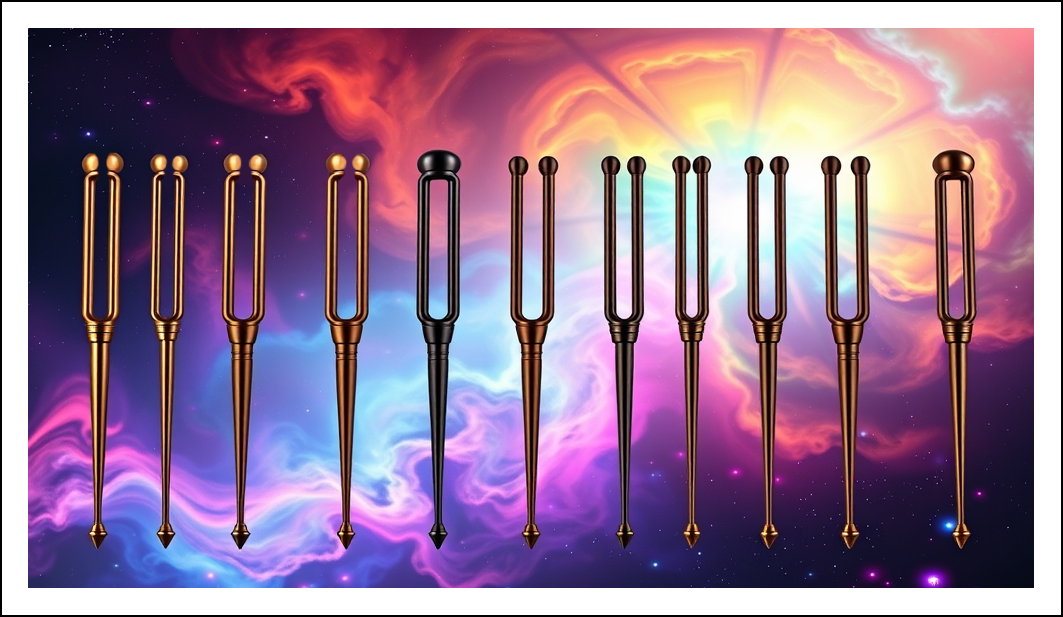
A Guide to Solfeggio Frequencies
Solfeggio Frequencies stand out for their growing popularity in wellness, meditation, and alternative healing communities.
These Solfeggio Frequencies refer to a set of specific tones used in sacred music and ancient chants. Each frequency is believed to vibrate at a particular energy level that can influence the human mind and body in profound ways.
The Solfeggio scale has six core frequencies:
396 Hz Ut Liberating guilt and fear
417 Hz Re Facilitating change and undoing situations
528 Hz Mi DNA repair and transformation
639 Hz Fa Enhancing relationships and connection
741 Hz Sol Awakening intuition and consciousness
852 Hz La Returning to spiritual order
An extended system that includes 174 Hz, and 285 Hz, are linked to physical healing and grounding, and 963 Hz associated with spiritual awakening.
Historical Origins
The original six Solfeggio Frequencies are often traced back to Gregorian chants, particularly those attributed to the Benedictine monk Guido d’Arezzo in the 11th century. These chants, especially the Hymn to St. John the Baptist, were said to use specific tones that created deep spiritual resonance. This hymn has the peculiarity that the first six lines of the music commenced respectively on the first six successive notes of the scale, and thus the first syllable of each line was sung to a note one degree higher than the first syllable of the line that preceded it. Because the music held a mathematic resonance, the original frequencies were capable of spiritually inspiring mankind to be more “spirit-kind”.
The first stanza of the hymn to St. John the Baptist reads:
Ut queant laxis Resonare fibris
Mira gestorum Famuli tuorum
Solve polluti Labii reatum
Sancte Iohannes
A translation from Latin: “In order that the slaves might resonate (resound) the miracles (wonders) of your creations with loosened (expanded) vocal chords. Wash the guilt from (our) polluted lip. Saint John.”
or:
So that your servants, can sing together, with loose strings. the wonders of their deeds. Oh Saint John, wash away the guilt of their polluted lips.
Modern practice
The modern revival of interest in these frequencies began in the 1970s, when Dr. Joseph Puleo, a physician and researcher, rediscovered the six-tone scale using numerological analysis of the Bible. His work, later popularized through the book “Healing Codes for the Biological Apocalypse”, stated that these frequencies have had profound effects on creation, matter, and human physical and psycological wellbeing.
Puleo identifies the solfeggio frequencies with the matrix as expessed in the Bible. “Matrices play intimate roles in every aspect of life. They underlie thought, sound, healing, and light”. From Numbers 3:12, 18:15 we learn, “Everything that openeth the matrix in all flesh,… shall be thine”. Also, in Psalms he identifies the Higgaion as meaning “a deep sound … arrising into life”. This may indicate the use of biaural beats or infrasound In this transforming mix.
While many practitioners and listeners report benefits from listening to Solfeggio Frequencies—such as reduced stress, enhanced meditation, and improved emotional balance—the scientific community remains cautious.
Current research into sound therapy, binaural beats, and frequency healing shows potential in how sound affects brainwaves, mood, and even cellular activity.
Many scientists put this down to the placebo effect, combined with the natural calming effect of steady, harmonic tones, to explain why many people report positive experiences.
In practice, the tones are best when it is almost impossible to hear them on their own. These frequencies do not need to be listened to at high volumes and in fact, it is discouraged, instead, the tones are meant to be heard in the background at lower volumes.
Conclusion
Whether you view Solfeggio Frequencies as ancient wisdom, sound science, or a spiritual curiosity, there’s no denying the growing interest in their potential to harmonize the body and mind. In a noisy world, perhaps tuning in to these subtle, sacred tones can help us restore inner balance. As with any wellness practice, personal experience matters most. If these frequencies resonate with you—literally and figuratively—they are a worthwhile addition to your journey toward holistic well-being and spiritual awakening.
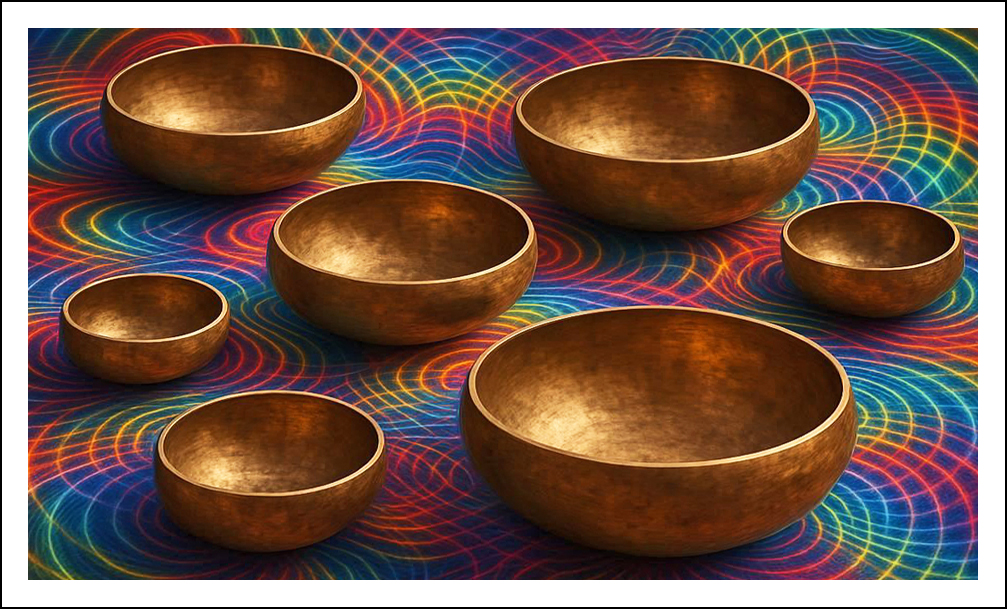
Singing Bowls
The origin of singing bowls is unknown. However, oral tradition dates their use to the time of the buddha Shayamuni (560-480BC). At this time they were used mostly for religious purposes, such as guiding meditiation, and leading chants. But also acting as offering, and begging bowls.
As would be expected from its buddhist origins, singing bowls are common throughout asia, with the main producers being India, Tibet, and Nepal. They have become common in the west for sound therapy and sound baths. In this form they are used as a tools to support health and well-being. They are popular for treating anxiety and depression, but also for improved blood pressure, immune system and aleviation of the side-effects of cancer treatments.
Drawing upon their religious origins, the bowls are said to activate specific chakras. Bowls of different frequencies are alligned to one of the seven chakras and stimulate these energy points. From the root chakra, tuned to C, they progress through; D, E, F, G , A, and B, where it reaches the crown Chakra.
In the west, the bowls are used in a mediative session where acoustic entrainment aims at creating a feeling of deep relaxation and influencing brainwave patterns to restore balance and peace. In addition to the multi metal bowls, the west uses large crystal bowls. The variety of bowls and qualities that are available, can lessen the impact these bowls can have in healing contexts, and these differing bowls are recommended for different scenarios and purposes.
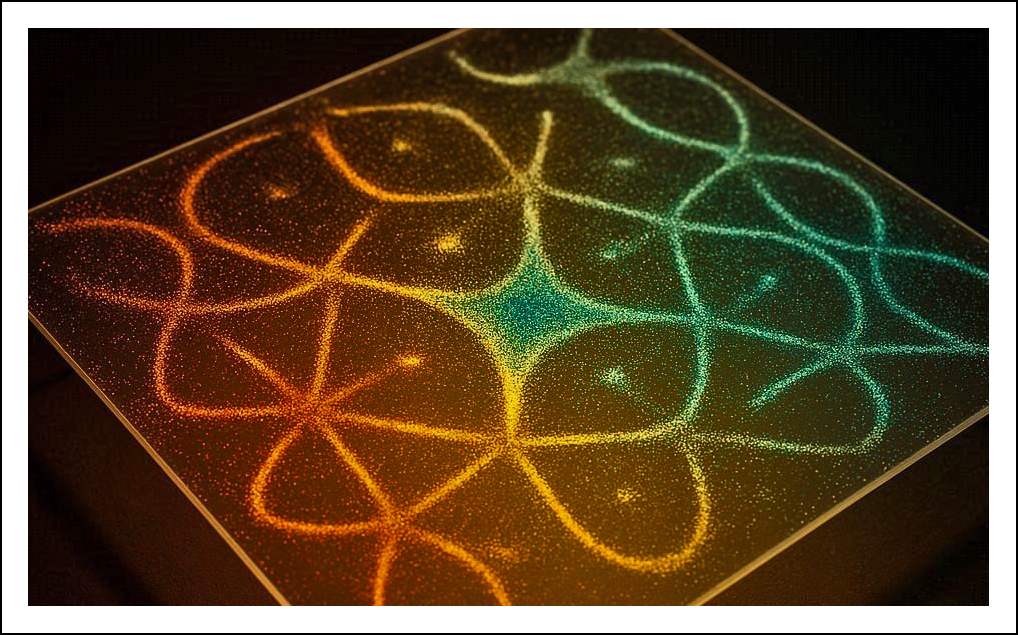
Chladni patterns
Chladni patterns are the geometrical figures obtained by sprinkling particles; such as sand, salt, and sugar grains or other similar materials, onto the surface of a vibrating plate. Then using violin bows, shakers, speakers, laser beams, etc., a stationary flexural vibration mode is generated into the horizontally supported plate. The sprinkled particles, are usually agglomerating on the plate in the regions of nil or very small amplitude of vibration. Thus, they visualize the nodal lines and produce the so-called standard Chladni patterns.
The complexity of the Chladni figure depends on the excitation frequency and the plate shape. Thus, on one hand, frequency augmentation leads to more complex patterns due to the superposition of various degenerate or nearly degenerate eigenmodes. On the other hand, vibration mode-mixing phenomenon corresponding to a specific geometry of the plate has been reported. Concretely, the vibration mode-mixing is different for triangular plates, square plates, rectangular plates, hexagonal plates, circular plates, perforated circular plates, violin-like shaped plates, etc.
Concerning the mode-mixing phenomenon, although the plate is excited by a harmonic central source, there are successive backward wave reflections on the boundaries of the plate, directed towards the source, and therefore, superposing on the main central mode. As a result, a dissonant sound that irritates the ear can be perceived during the experiments. Due to their numerous applications several resonant and non-resonant patterns of simple and symmetrical geometry are identified.
One experimentally proves that the shape of the Chladni figure changes at augmentation of the excitation frequency. Thus, the circular shape observed at the lowest frequency, is successively shifting into a ring-like shape, then into an elliptical shape, followed by two elliptical-arcs, two parallel segments, two hyperbolical-arcs, and finally is changing into the plate diagonals. These unsophisticated patterns of the simplest geometrical configuration can be used to achieve a certain desired movement path of particles on the vibrating plate by simply adjusting the excitation frequency.
Extract from: European Journal of Engineering and Technology Research.
Visualization of Chladni Patterns at Low-Frequency Resonant and Non-Resonant Flexural Modes of Vibration.
Vol 9 | Issue 3 | June 2024
Dear David,
What you call “reality” might be far more mysterious than you think… What if nothing you see, touch, or hear is truly objective? What if everything is simply a projection of your own consciousness?
This is exactly what quantum physics is beginning to reveal: Particles do not exist in a defined state until they are observed. In other words, without consciousness, there is no measurable reality. Matter is just slowed-down energy. What appears “solid” is, in truth, only a denser form of vibration. The higher the frequency, the more invisible it becomes… but no less real. Even a declassified CIA document—the Gateway Process, suggests that reality is a projection of consciousness interacting directly with the energy of the universe.
Your consciousness—shaped by your thoughts, emotions, and beliefs—creates the experience you call “life.” Each thought is a seed. Each emotion is the energy that makes it grow. And just like in a dream, your deepest fears and desires take shape in your physical world. But there is one frequency that stands above all others: love.
Love is the highest vibration. It unifies, uplifts, heals. It reconnects the human being to their divine nature, to their infinite creative power. In contrast, fear, anger, and ego lock the soul within the boundaries of the body. You are not here to suffer your reality. You are here to create it. By aligning your thoughts, emotions, and actions with love, you become a conscious creator once again—fully connected to the whole. Your power does not come from the outside. It has always been within you.
In Tibetan temples, monks have been talking for centuries about a secret that modern science is finally confirming. They say: “Your physical body is nothing but a reflection of your spiritual state.” For decades, Westerners scoffed. “Superstitions from another age.” Until researchers discovered something stunning… When studying the DNA of people who meditated intensively for 8 weeks… They noticed their genes were changing… Literally. The stress genes shut off. The healing genes turn on. Inflammation disappeared. Regeneration exploded. Spirituality modifies our genetic code in real-time.
This discovery turns upside down everything we thought we knew about DNA… Our DNA isn’t a fixed destiny. It’s a spiritual program we can reprogram. Tibetan monks have always known this: when you raise your vibration, you transform your biology. But now, science proves it.
Your meditation? It deactivates the genes of stress and anxiety. Your gratitude? It activates the genes of regeneration and abundance. Your spiritual elevation? It literally rewrites your genetic code. Every spiritual state you cultivate sends energetic signals to your cells.
When you vibrate fear : → Your survival genes activate → Inflammation, stress, blockages → Your body closes itself to abundance.
When you vibrate love and certainty : → Your growth genes awaken → Healing, creativity, prosperity → Your body opens to miracles.
Spirituality isn’t “personal development.” It’s sacred bio-engineering. Every spiritual practice reprograms your DNA. You think you “don’t have the right genes” to succeed? FALSE. You simply haven’t learned yet to activate the right programs. Ask yourself this question seriously: “Which version of my DNA do I want to activate today?” That of your broken parents? Or that of the powerful being you truly are? Every emotion is a biological switch. Every belief is a genetic signal. Every vibration reprograms your cellular destiny. You’re not a prisoner of your genes… You’re their programmer.
Spiritually,
Daniel
Law of Insights

Sacred landscapes – Sacred Sounds
Inline with the original New Sites – New Fields project, I’m still interested in how people create and use sacred spaces. Particularly how beliefs influence the sound-scape encountered. From my recent travels I’ve recorded the sounds from temples, churches and spaces set aside for contemplation. This is edited into the following video.
We see the sacred sounds becoming an analogue of the natural world, the ringing of rainfall or the rumble of thunder. A personal encounter expressed individually even if performed in a group.
We also encounter the subjection of the individual to be replaced by the power of the group. Unified purpose energising the sacred space. A polliphony of voices raised up to echo in the resonant cathedral arches.
Yet it is expressed that modern song has lost the the religious power of the Gregorian Chant. That we have overcomplicated and undermined the power of the frequencies.
Gregorian Chant
(info:- Ut Queant laxix – Hymn to St. John the Baptist. performed by Donna Stewart live from the Shrine Church of St. Stanislaus, Cleveland, Ohio.)
Gregorian Chant unlocking Sacred Resonance
In a time when modern sound healing tools range from crystal bowls to digital frequencies, there’s a quiet yet powerful resurgence of interest in one of the oldest sound practices in Western tradition: Gregorian chant. This ancient, monophonic form of singing—rooted in the early Christian liturgical tradition—not only carries a rich spiritual heritage, but offers a compelling framework for activating sacred spaces and guiding therapeutic sound experiences.
While polyphony dominated much of the later Western musical canon, plainchant offers something fundamentally different: clarity. In sacred spaces such as cathedrals and monasteries, where every stone amplifies and reflects sound, polyphonic compositions can become acoustically muddy, with overtones colliding or diffusing into indistinct resonance.
Gregorian chant, on the other hand, resonates as a unified wave. This creates a focused sonic field, especially potent in domed or vaulted spaces designed with spiritual acoustics in mind. The simplicity of chant doesn’t diminish its power—it enhances it. Like a single tuning fork struck in stillness, it calls both body and building into a shared vibratory field.
The Hexachord: The Sacred Six
At the core of Gregorian chant lies the hexachord, a six-note scale (ut-re-mi-fa-sol-la) derived from the teachings of the medieval music theorist Guido of Arezzo. Unlike the modern diatonic scale, which spans seven notes (do-re-mi-fa-sol-la-ti), the hexachord stops just short of the octave. This truncated scale, intentionally “incomplete,” leaves space—both musically and symbolically—for the ineffable.
The intervals within the hexachord are gentle and natural. Particularly notable is the interval between mi and fa, which is a semitone—a delicate step that introduces just enough tension to make the line feel human, expressive, and emotively charged. The other intervals are whole tones, creating a scale that unfolds organically, with balance and ease.
In sound therapy, scales matter. The hexachord’s symmetry and resonance align well with natural vocal expression and breath, allowing for therapeutic sound work that feels less cerebral and more embodied. Unlike some modern tuning systems that can feel dissonant or artificially structured, the hexachord is a reminder that healing sound doesn’t need to be complex—it needs to be true.
Resonating with Space: Chant as Architectural Activator
Sacred spaces—cathedrals, chapels, domes, caves—are not merely containers of sound; they are collaborators. Gregorian chant, because of its monophonic nature, interacts with an architecture in a way that polyphony often cannot. Each note, held in unison, blooms outward, filling the space and allowing for a lingering resonance that seems to pulse in tandem with the structure itself.
This phenomenon can be harnessed by sound practitioners working in resonant environments. A simple melodic line, sung with intention and awareness of the space, can awaken what the ancients might have called the genius loci—the spirit of the place. Whether used in ceremonial contexts, healing sessions, or artistic installations, plainchant offers a uniquely effective tool for sonic activation.
ChatGPT
{info:- “Halleluiah” – Gregorian Chant by Sacre Coeur}
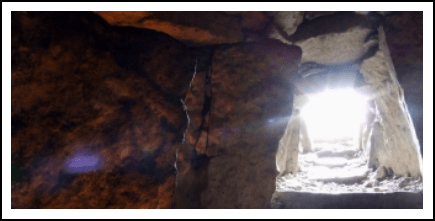
Analysis of the thesis by Darren McCartney for his B.Sc. (hons) in Applied Archaeology May 2019.
The project looks at the potential for acoustically stimulated ASC’s (Altered States of Consciousness) generated by past rituals in the Carrowkeel complex of passage tombs. The experimental data was collected in Cairns G and K, by the production of selected sound frequencies within the tombs, and by capturing the returning waves with microphones for later analysis. In addition to identifying any standing waves generated, subjective experiments looked for ASC’s using the Helmholtz Resonance generated by beating a drum at rhythms between 2 – 7Hz, and the volunteers reflecting on their experience of frequencies between 20 – 20,000Hz throughout the Cairns.
Using Room EQ wizard software the tomb responses were analyised. For Cairn K, potential resonant frequencies were recorded at 51Hz, 76Hz, 96Hz, 123Hz, 209Hz, and 410Hz.. The common frequencies from all positions of the recording microphones identified the ranges of 49-52Hz, 96-101Hz, and 118-123Hz as significant.
From Cairn G resonant frequencies can be identified at 35Hz, 57Hz, 85Hz, 106Hz, 126Hz, 174Hz, 188Hz, and 214Hz.. The common frequencies for all microphone positions was 39-43Hz, 87-93Hz, 111-112Hz, 166-169Hz, 182-188Hz and 214-217Hz. It was also noted that the sounds produced inside the cairns could be easily heard outside for a distance of 20m in a 180°arc around the opening. Darren’s anaysis suggests that the resonant frequencies in Cairn K are generally 10Hz higher due to the greater internal volume of the space.
From the Drumming in cairn G a helmholtz resonance of 6Hz was identified and it was reported that in both cairns, ASC’s were experienced from 3-8Hz with the strongest effects at the 6Hz frequency.
In his anaysis, Darren noted the lack of firm evidence in Ireland for early musical instuments. This supported the idea of the human voice being considered as the potential sound source for activating the tombs resonances. In both male and females, the very low frequences are possible using techniques as found in the folk music of Russia and Papua New Guinea. However, current singing ranges are more normal in the 300Hz to 540Hz range, with only adult males able to reach below 80Hz.
Analying the standing wave data which utilised subjective experience by volunteers. In Cairn G effects were experienced at 50HZ, and raising in effect through 100Hz, 200Hz, 250Hz, 400Hz, 500Hz, 550Hz, 600Hz, 650Hz, and 700Hz. Cairn K had similar results but were more localised, and both constructive and destructive interferenace was observed.
In relation to the main focus of the study, that of ASC’s, the infrasound frequencies between 3-8Hz can effect the parasympathic state of the brain. These are experienced as the relaxasion of muscles and effects on the limbic system associated with pleasure centre stimulation. “All individuals taking part experienced some muscle relaxation as well as a strong feeling of happiness or being content almost to the point of ecstacy.” These infrasound waves were created by drumming and it is postulated that this caused direct stimulation of the brain to produce the ASC’s experienced, with the suggestion that prolonged playing would have had more profound results such as hallucination as fatigue sets in.
 www.dappledshadows.ie
Leave a comment